
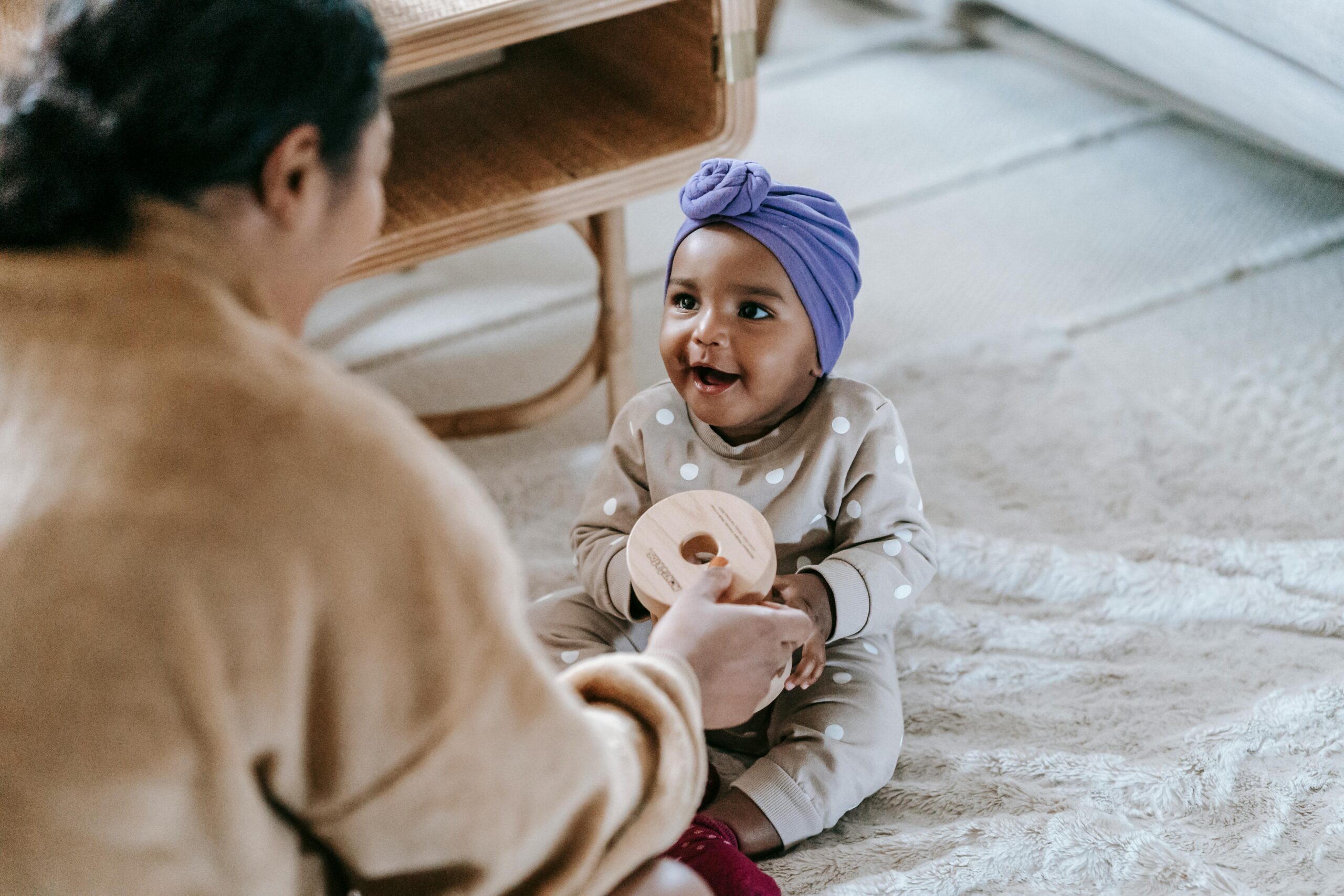
As a postpartum professional, I have had hundreds, if not thousands, of conversations with parents about their wishes for their babies. Often, parents express fear or anxiety around the possibility of their child crying. As a mother, I get it! We want to see and feel our babies be content, AND the reality of being a human is that we will feel and experience a wide range of emotions. This includes babies!
That said, I like to spend time encouraging parents to consider the topic of relationship building. Babies are constantly communicating (including, maybe even especially, when they are crying), and focusing attention on the relationship can help parents shift their energy towards one of curiosity, rather than urgency or anxiety. Instead of feeling like you must do everything you can to stop your baby’s crying, parents can try to stay open to what baby is communicating, or even justthat they are communicating.
In this article, we are zooming out from the instance of baby crying to look more broadly at the dynamic of being in relationshipwith your baby, a process that requires input, noticing, flexibility, and learning from both of you.
Ways to Build a Relationship with Your Baby
* Note: all babies and families are different and unique. The ideas shared below may not fit your baby or your family, and that’s okay. Edit/adjust/add to this list to make it meaningful to your family,
- Talk directly to your baby.Narrate what you are doing, discuss the steps of processes that you are doing together (getting them dressed, disappear changes, picking them up, etc.), tell the story of your day together, mimic their sounds, make eye contact, sing to them, and so on. Even if you feel a little silly at first, make conversation with your baby! Read to them–baby books and even things you are reading for pleasure or news, and notice what they seem to react to. Babies do like sing-songy voice tones, but they also like to hear more typical conversation. So whatever feels most accessible to you with engaging your baby in conversation, start there.
- Make space for pauses. While talking is important, making space for your baby to take breaks is equally important. Additionally, ensure that you engage in a back and forth conversation, giving them plenty of space to add to the conversation (verbally and/or nonverbally).
- Spend time engaging in loving touch.Contact naps, baby wearing, snuggling, and other moments throughout your day can be times to tend to physical touch. Notice the touch your baby seems to enjoy and prefer, as well as touch they don’t like.
- Sing together. Singing and making music are beautiful ways that people have been connecting across time. Music is very stimulating for baby’s brain. Additionally, specific songs or sounds can become cues for repeating transitions in your day. For example, singing the same song before bedtime can help baby build an association with this time of day and what it means for them. Furthermore, it can be soothing and relaxing for them to have something predictable.
- Remember that feelings are part of being human. If someone was always rushing to shut down your crying or screaming or laughing, you would probably be quite annoyed, angry, or hurt, right?! Babies, even though they don’t have the developed prefrontal cortex that we do, also need and want to express themselves. We can do our best to show up with compassion, love, and curiosity, no matter how baby is expressing themselves.
- Make play a practice. Each day, several times a day, engage in play with your baby. At the beginning, this starts very small with things like showing them high contract images, shaking a rattle, blowing raspberries, offering a toy they can grasp onto, putting them in front of a mirror, and so on. Even just a few minutes of intentional play can help you and your baby connect! Soon enough, they will be laughing and smiling and, yes, crying sometimes, too.
Baby Guru is Here for You
We are here to support your family and help you navigate the joys and challenges of early parenthood. Reach out about postpartum support in Austin or birth and postpartum support in Asheville!
*Photo credit: William Fortunato







0 Comments